Unleashing Potential: How Sports Technology & Wearable Performance Gear Are Revolutionizing Athletics
Imagine pushing your limits, not just with sheer will, but with intelligent partners guiding every stride, every rep, every recovery moment. The landscape of athletic achievement is undergoing a profound transformation, driven by cutting-edge Sports Technology and revolutionary Wearable Performance Gear. These innovations aren’t just for elite athletes; they’re democratizing insights, making personalized training and injury prevention accessible to fitness enthusiasts and weekend warriors alike. Get ready to unlock new levels of potential as we explore how these tools are reshaping what’s possible in sports.
The Evolution of Athletic Performance Tracking
For decades, tracking athletic performance relied on stopwatches, clipboards, and subjective observations. Today, this has been entirely revolutionized by sophisticated digital tools. Athletes now benefit from an unprecedented level of granular data, moving far beyond simple time and distance metrics.
Building on this foundation, modern athletic tech integrates seamlessly into daily routines. GPS trackers, advanced heart rate monitors, and cadence sensors provide real-time feedback. This enables coaches and athletes to make immediate, data-driven decisions during training sessions.
From Basic Metrics to Predictive Analytics
It’s no longer just about collecting data; it’s about understanding and predicting outcomes. Advanced algorithms and machine learning now process vast amounts of biometric information. This allows for insights into fatigue levels, recovery needs, and even potential injury risks.
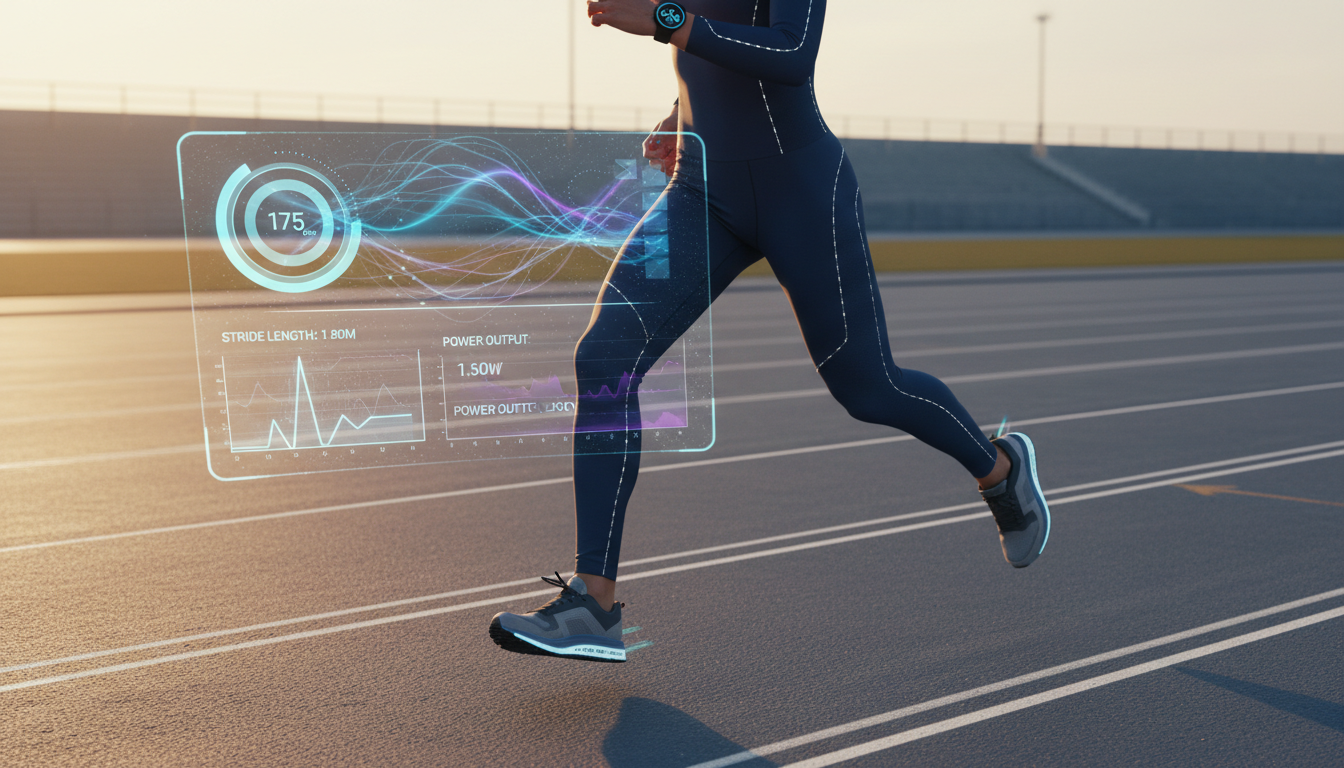
For instance, sophisticated running sensors can analyze stride length, ground contact time, and pronation in real-time. This detailed biomechanical feedback helps athletes refine their form, optimize efficiency, and significantly reduce the likelihood of overuse injuries. Sleep tracking, when integrated, provides crucial recovery metrics, further enhancing performance strategies.
Wearable Performance Gear: Beyond the Wristband
While smartwatches remain popular, the realm of wearable performance gear has expanded dramatically. We’re now seeing an integration of sensors directly into apparel, footwear, and even sports equipment. This discreet yet powerful technology provides comprehensive data without impeding movement.
These advanced wearables offer a more holistic view of an athlete’s physical state. They capture data points that were once impossible to obtain during natural movement. This means more accurate insights into training load and physiological responses.
Smart Apparel and Biometric Integration
Imagine a compression shirt that monitors your heart rate, respiration, and muscle activity, all while you train. This is the reality of smart apparel, which embeds biometric sensors directly into fabric. These garments offer continuous, unobtrusive monitoring, enhancing comfort and data accuracy.
Similarly, smart shoes can analyze foot strike patterns, power output, and even ground reaction forces. This level of detail helps runners, basketball players, and many other athletes optimize their movement mechanics. The integration of these sensors into everyday gear makes performance tracking effortless and pervasive.
Injury Prevention and Rehabilitation through Technology
One of the most significant impacts of sports technology lies in its ability to prevent injuries and accelerate recovery. By continuously monitoring an athlete’s biomechanics and physiological responses, potential issues can be identified long before they manifest as injuries. This proactive approach saves careers and reduces downtime.
Furthermore, advanced wearables and sensor systems are invaluable in rehabilitation. They provide objective data on progress, ensuring exercises are performed correctly and safely. Therapists can track range of motion, strength gains, and symmetry, leading to more efficient and effective recovery protocols.
Real-Time Feedback and Personalized Training
The immediate availability of performance data is a game-changer for personalized training. Athletes receive instant feedback on their technique, effort, and physiological markers. This allows for on-the-fly adjustments, optimizing every training session for maximum impact.
Coaches can leverage this continuous stream of data to create highly individualized training programs. These programs adapt dynamically to an athlete’s daily readiness, progress, and specific goals. This level of personalization ensures that training is always challenging yet sustainable, preventing overtraining and plateauing.
The Future Landscape: AI, AR, and Immersive Training
The evolution of sports technology shows no signs of slowing down. Looking ahead, we can anticipate even more sophisticated integrations of artificial intelligence, augmented reality, and virtual reality. These innovations promise to create truly immersive and intelligent training environments.
AI-powered virtual coaches could offer hyper-personalized guidance, adapting in real-time to an athlete’s performance and mental state. Augmented reality overlays might provide visual cues for optimal form or tactical positioning. Meanwhile, virtual reality could simulate competitive environments, allowing athletes to practice under pressure without physical wear and tear, pushing the boundaries of preparation.
The integration of advanced sports technology and wearable performance gear is fundamentally reshaping how we train, compete, and recover. These intelligent tools empower individuals at every level to understand their bodies better, optimize their efforts, and unlock unprecedented levels of potential. Embrace these innovations to transform your own athletic journey, turning aspirations into measurable achievements and discovering new frontiers in personal performance.
